

What began as political rumour has crystalised into one of the most consequential realignments in Plateau State’s recent history.
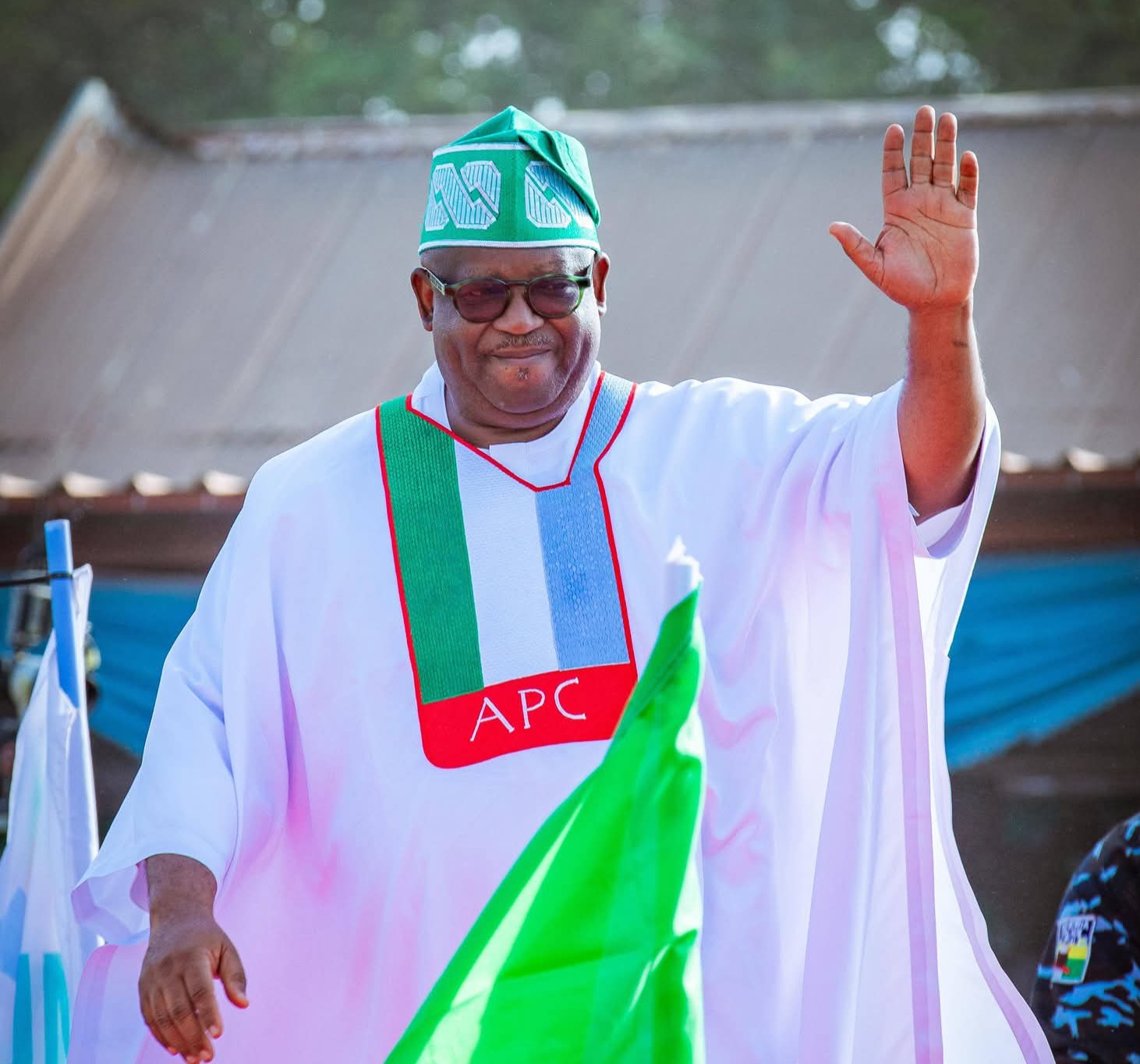
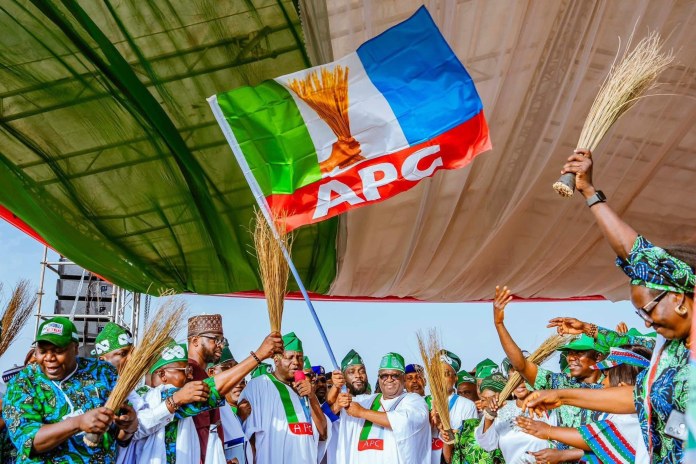
On Tuesday, plateaued by an electrified crowd at the Polo Field in Jos, Governor Caleb Mutfwang’s formal entry into the All Progressives Congress (APC) signalled not just a change in party membership but a broader realignment of power that could reshape both state and national politics ahead of the 2027 general elections.
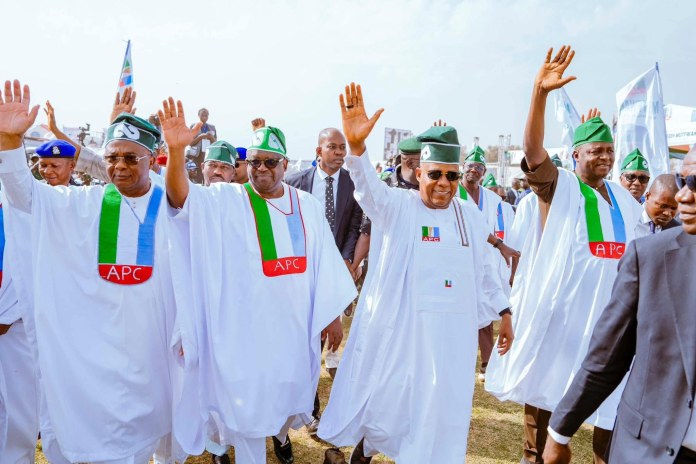
The occasion was not merely ceremonial. It brought together Nigeria’s political heavyweights from the Vice President to the Senate President, the Speaker of the House of Representatives, and governors from across the country underscoring the national significance of the move.
For critics and supporters alike, the event marked a turning point in Plateau politics, one that promises to influence governance, electoral dynamics, and regional alliances for years to come.
Vice President Kashim Shettima set the tone for the event by framing the realignment as rooted in national unity and shared purpose, rather than narrow partisan ambition. Reflecting on Plateau’s contributions to Nigeria’s history, the Vice President paid tribute to figures like former Head of State General Yakubu Gowon and other Plateau sons whose sacrifices strengthened national cohesion.
“To have Plateau in the All Progressives Congress is to show the world that we are indeed prepared to be the party for all Nigerians,” Shettima said, describing the APC as a national platform “open to all Nigerians committed to unity, peace and inclusive development.”
Shettima also used the platform to highlight federal government commitments aimed at accelerating development in Plateau from infrastructure projects like the Akwanga–Jos road to social and economic programmes designed to empower local communities.
Standing alongside the Vice President, Senate President Godswill Akpabio underscored the political symbolism of Mutfwang’s move. Akpabio praised APC National Chairman Prof. Nentawe Yilwatda for “delivering Plateau to the APC” and assured that President Bola Ahmed Tinubu would continue to engage Plateau as a partner in national development.
He also pledged that the National Assembly would support policies and appropriations to address lingering problems facing plateau communities, including the plight of internally displaced persons , a nod to the humanitarian challenges that have long dogged the state.
Also, The Speaker of the House of Representatives, Rt. Hon. Tajudeen Abbas, described the governor’s switch as historic, noting that Plateau was the last state in the North Central zone to formally align with the APC.
He echoed the theme of unity, urging party members to work collaboratively and resist any tendency toward factionalism.
“Governor Mutfwang’s movement to the APC has brought unity to the state; it will also bring progress,” Abbas said, stressing that as leader of the party in Plateau, the governor must embrace reconciliation and give every segment of society a sense of belonging.
Governor Hope Uzodimma of Imo State, who chairs the Progressive Governors’ Forum, a grouping of APC state executives spoke on behalf of his colleagues, praising Mutfwang as “one of the best and brightest” and reaffirming that the APC family was poised to bring “renewed hope” to Plateau.
Uzodimma’s remarks reflected a broader consensus among APC state governors that the inclusion of Mutfwang would strengthen not just Plateau’s political position but the electoral machinery of the party across Nigeria.
His presence reinforced the idea that the realignment was strategic, coordinated, and supported across the party’s federal structure.
Governor Caleb Mutfwang himself was careful to frame his decision in pragmatic, governance-oriented terms. Describing the APC broom, the party’s emblem as a symbol of unity, he said his goal was “to add value” to the party and to stop the political rivalries that have long characterised Plateau politics.
“We have not come to take over, but to add value to the party. Together, all political rivalry on the Plateau will henceforth stop, and we will reap the benefits of unity,” Mutfwang said.
He also reiterated his and his administration’s alignment with President Tinubu’s vision, underscoring that the governor’s decision was rooted in a belief that federation cooperation would yield more development for Plateau.
In his remarks, APC National Chairman Prof. Nentawe Yilwatda placed the event in the broader context of party consolidation. He welcomed Mutfwang “with open arms” and described the move as a statement of hope for peace, inclusive development and social justice in Plateau.
Yilwatda also framed the realignment as a decisive prelude to the 2027 elections, assuring that both President Tinubu and Governor Mutfwang would win “overwhelmingly” in Plateau, reinforcing the APC’s projection of strength and unity.
The wide range of voices at the event from national leaders to state governors suggests that what might once have been a local political calculation has become part of a national electoral strategy.
For supporters, it promises greater federal attention and faster implementation of development projects. For critics, it compounds concerns about the erosion of opposition party space and political pluralism in Plateau.
What is clear is that Plateau’s political terrain has shifted. Reduced now to an APC stronghold, the state has moved from the margins of national party competition into the centre of Nigeria’s ruling party’s electoral and governance calculus.
Whether this realignment delivers on the development promises articulated by leaders at the event and whether it withstands the tests of accountability and inclusive governance will shape the political narrative leading into 2027.


