
Journalists in Plateau State have received training on artificial intelligence-driven misinformation, deepfakes, digital verification, and conflict-sensitive reporting amid growing concerns over the role of manipulated online content in fuelling division and public distrust.
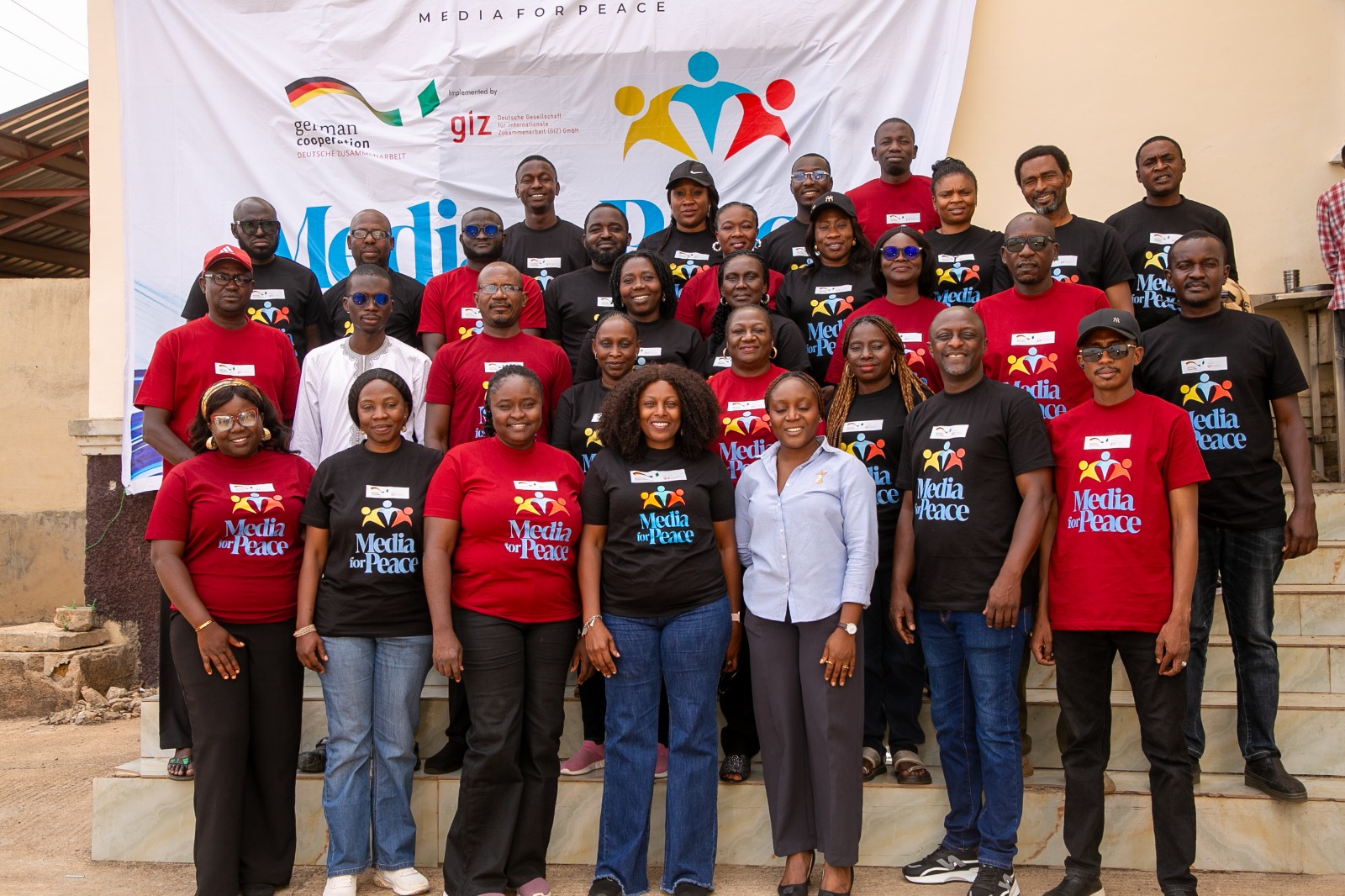
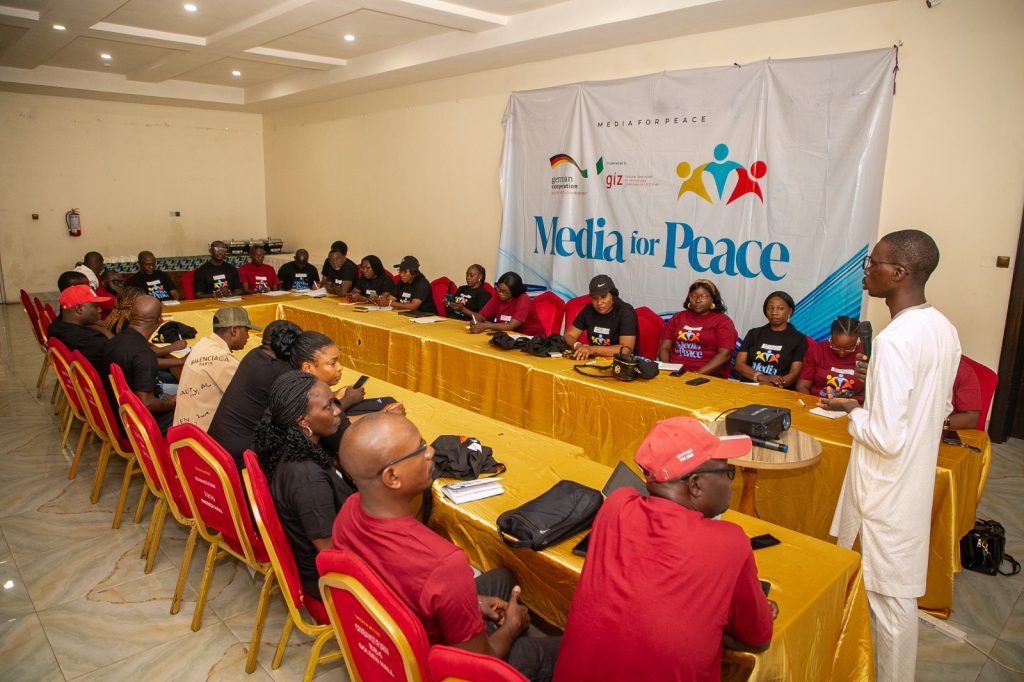
The three-day Media for Peace training was organised by the German Agency for International Cooperation (GIZ) in collaboration with the Plateau State Peace Building Agency under the PEACECORE Programme.
The workshop, held at Crispan Suites and Event Centre in Jos, brought together journalists from various media organisations to strengthen their skills in peacebuilding, fact-checking, digital journalism, and responsible reporting.
Discussions at the training focused on emerging digital threats including AI-generated disinformation, manipulated visuals, hate speech, coordinated online campaigns, and the spread of false narratives across social media platforms.
Speaking during the workshop, researcher and reporter, Abdullahi Murtala, said digital media has transformed journalism and information sharing globally, but warned that the same technology is increasingly being used to spread misinformation and inflame tensions.
According to him, social media platforms now shape public narratives and emotional reactions, while false information often spreads fear, anger, and panic faster than verified reports.
Murtala stressed that journalists must understand how emotional manipulation works online, particularly in conflict-sensitive environments such as Plateau State where careless framing and misleading narratives could escalate tensions.
“People now depend heavily on social media for information, interaction, and even emotional validation. False information does not only spread pictures or videos, it spreads emotions. That is why journalists must prioritise verification and accuracy over speed because virality does not equal truth,” he said.
Murtala warned that manipulated content, recycled videos, cheapfakes, and AI-generated deepfakes are becoming increasingly difficult to detect as technology advances.
He said journalists now require stronger digital verification skills including reverse image searches, geolocation techniques, forensic analysis, and cross-platform verification before publishing online content.

According to him, digital investigative tools can also help expose coordinated online campaigns by identifying who initiated and amplified false narratives.
Murtala added that modern journalism has evolved beyond traditional reporting, with media organisations increasingly investing in digital storytelling, podcasts, visual journalism, TikTok explainers, mapping tools, and multimedia reporting to engage wider audiences.
Also speaking, media and communications expert, Lois El-Kojonwa Ugbede, described artificial intelligence and social media algorithms as major forces reshaping the global information ecosystem.
She explained that the digital space has become highly democratised, allowing virtually anyone with internet access to publish content without traditional editorial gatekeeping.
According to her, the rise of AI-generated content has created fresh challenges for journalists because technology can now manipulate audio, images, and videos in highly convincing ways.
Ugbede said misinformation, disinformation, and malinformation continue to threaten public trust and social cohesion, especially when amplified through sensational headlines and algorithm-driven engagement systems.
“Artificial intelligence has made the challenge even more complex because AI can make people appear somewhere they have never been or say things they never said. Journalists must understand the different forms of information disorder and consistently verify digital claims before publication,” she said.
She noted that some users unknowingly spread misleading information because of confirmation bias and online echo chambers, while others deliberately circulate false content for political, financial, or ideological reasons.
Participants were also introduced to AI tools, fact-checking databases, reverse image search techniques, and other digital verification platforms designed to help journalists identify manipulated or misleading content before amplifying it online.
Earlier, GIZ Senior Technical Adviser, Susan Gopuk, said the Media for Peace project currently operates in Plateau, Kaduna, and Taraba states in partnership with governments, civil society organisations, media institutions, and development partners including the Norwegian Refugee Council.
She said the initiative focuses on strengthening peacebuilding, conflict transformation, social cohesion, and responsible communication within fragile communities.
Gopuk emphasised the critical role of the media in countering hate speech, misinformation, and divisive narratives capable of triggering violence in vulnerable communities.
Also speaking during the training, Lady Irene David of the LIDA Network urged journalists to uphold professionalism, balanced reporting, and ethical standards, warning that sensational reporting and biased narratives could worsen tensions within communities.
According to her, journalists must intentionally promote accurate and conflict-sensitive reporting that encourages dialogue, understanding, and unity.
Participants described the workshop as timely and impactful, noting that the sessions expanded their understanding of digital verification, ethical journalism, artificial intelligence tools, and the responsible use of technology in modern reporting.
One of the participants, Sekyen Walshak, said the training helped journalists better understand their responsibility in promoting peace through accurate and conflict-sensitive reporting.
“Our reports can either escalate conflicts or help reduce tensions. We must ensure that everything we publish is factual and free from emotions, sentiments, or bias, especially when reporting conflict situations,” she said.