The Nigeria Democratic Congress (NDC) has alleged that opposition political parties are being targeted through coordinated court actions and internal crises ahead of the 2027 general elections, claiming the development is aimed at frustrating the growing popularity of former Labour Party presidential candidate, Peter Obi, and other opposition figures.
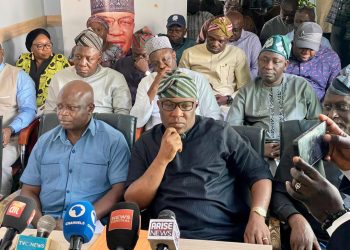
Speaking at a press conference in Jos on Tuesday, Plateau State Chairman of the NDC, Comrade Solomon Ndam, said the 2027 election would determine whether Nigerians could freely choose their leaders through the ballot.
“The 2027 election is not merely a political contest; it is a referendum on whether this country is capable of democratic self-correction and whether the people who have been impoverished for decades can still exercise their sovereign right to change their leadership through the ballot,” he said.
Ndam alleged that Obi’s growing political influence had unsettled entrenched political interests, claiming that efforts were being made to weaken opposition parties through sponsored internal divisions and judicial processes.
“Peter Obi, whatever your political persuasion, represents something that frightens certain interests. He is not a product of the same machine that has recycled power among the same networks for the past three decades. He is not beholden to the same godfathers, and for that reason, the same machine is not resting,” he stated.
The NDC chairman claimed that similar challenges were being experienced by several opposition parties, including the African Democratic Congress (ADC), Social Democratic Party (SDP), Peoples Redemption Party (PRP) and the NDC.
According to him, the recent court judgment affecting the NDC formed part of a broader pattern of attempts to destabilise opposition parties ahead of the next general elections.
He called on the Nigerian Bar Association, civil society organisations and the media to demand transparency over what he described as the activities of the Peace Movement Party, which he said instituted the legal action against the NDC.
“Who funds it? Who animated it after 11 years of dormancy? Who paid the filing fees? These are legitimate questions of public interest in a democracy where judicial processes have been weaponised against the opposition,” Ndam said.
He, however, urged Nigerians not to be discouraged by the legal challenges confronting opposition parties, expressing confidence that such actions would ultimately strengthen public support for democratic change.
The NDC chairman also cautioned the ruling party against actions capable of undermining Nigeria’s democratic process.
“We urge those in power not to kill democracy. If previous administrations had done what is happening today, those currently in government would not have had the opportunity to assume office,” he said.
Ndam maintained that the NDC would continue to pursue legal means to protect its interests and participate fully in the 2027 general elections.