
The political significance of President Bola Ahmed Tinubu’s November 14 visit to Plateau State may ultimately be measured less by the endorsements he received at the campaign rally than by whether his promises on security, the return of displaced persons and economic development translate into lasting changes in the state.
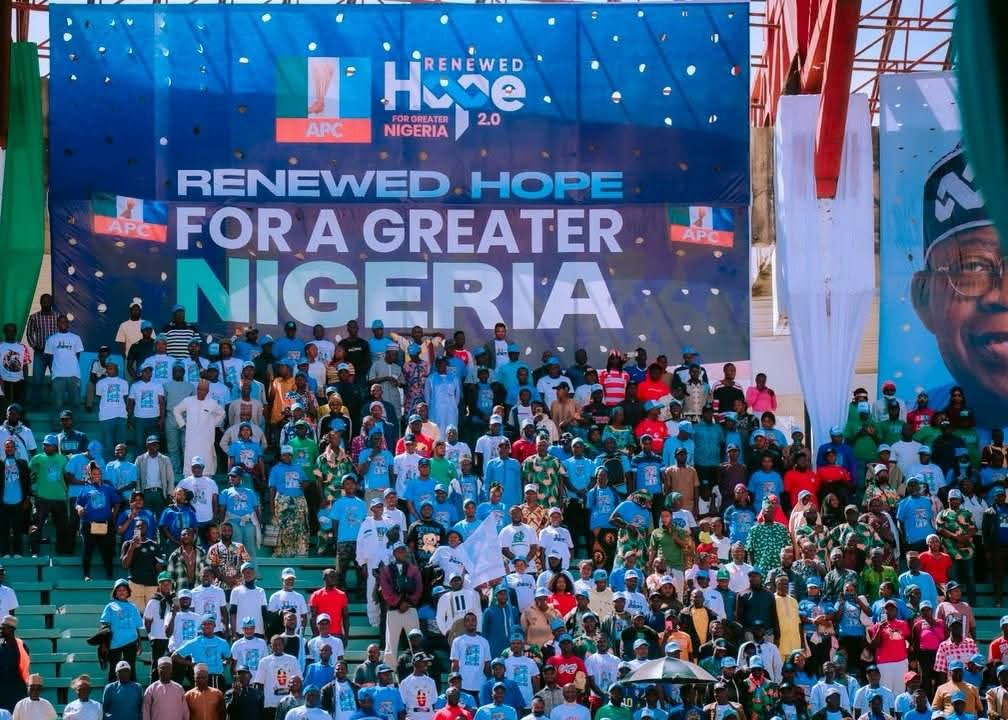
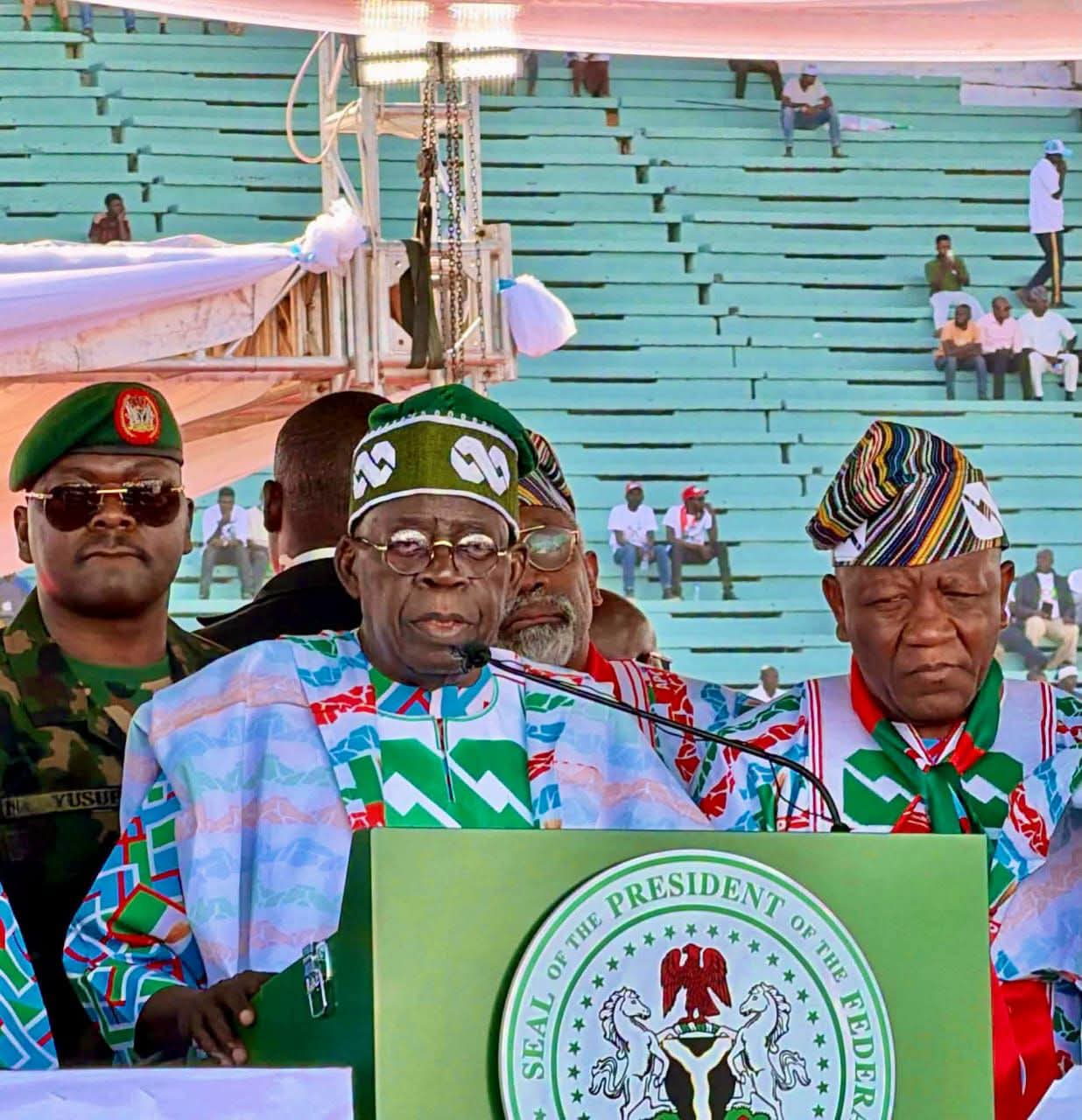
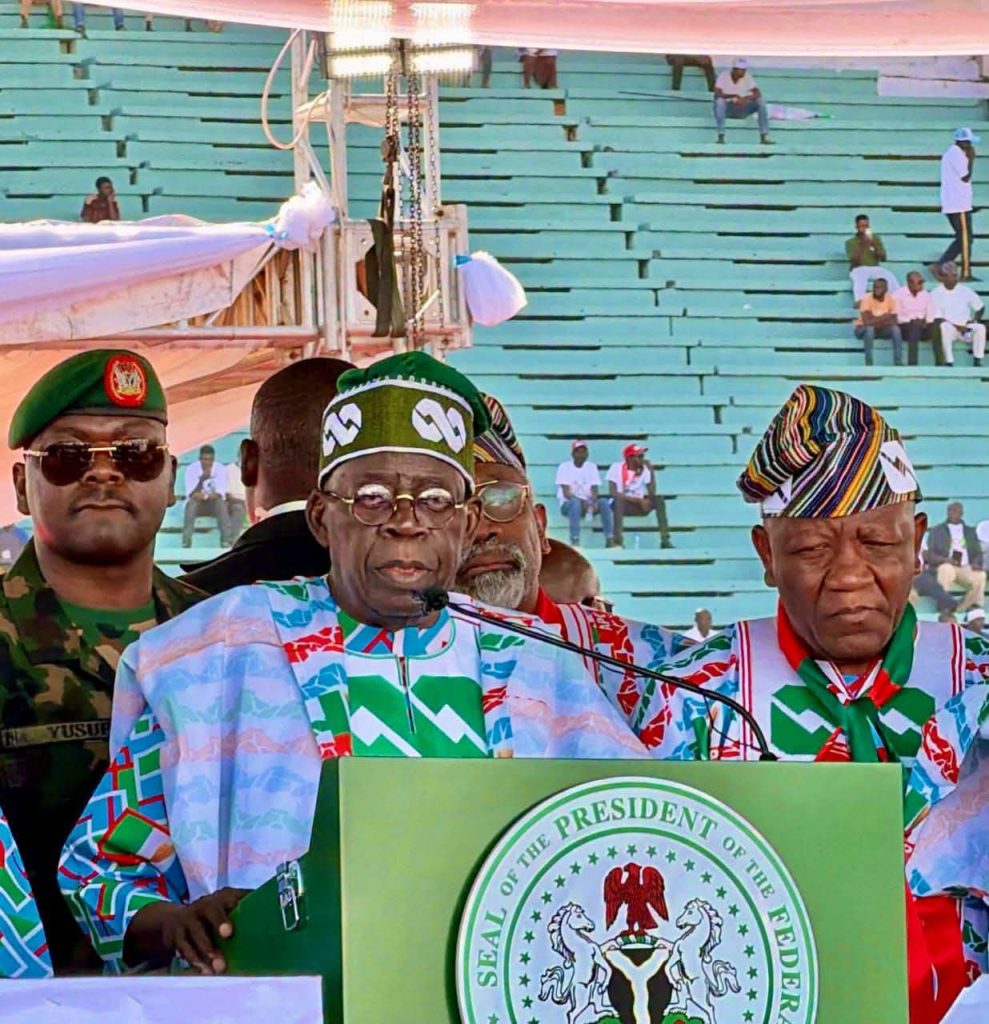
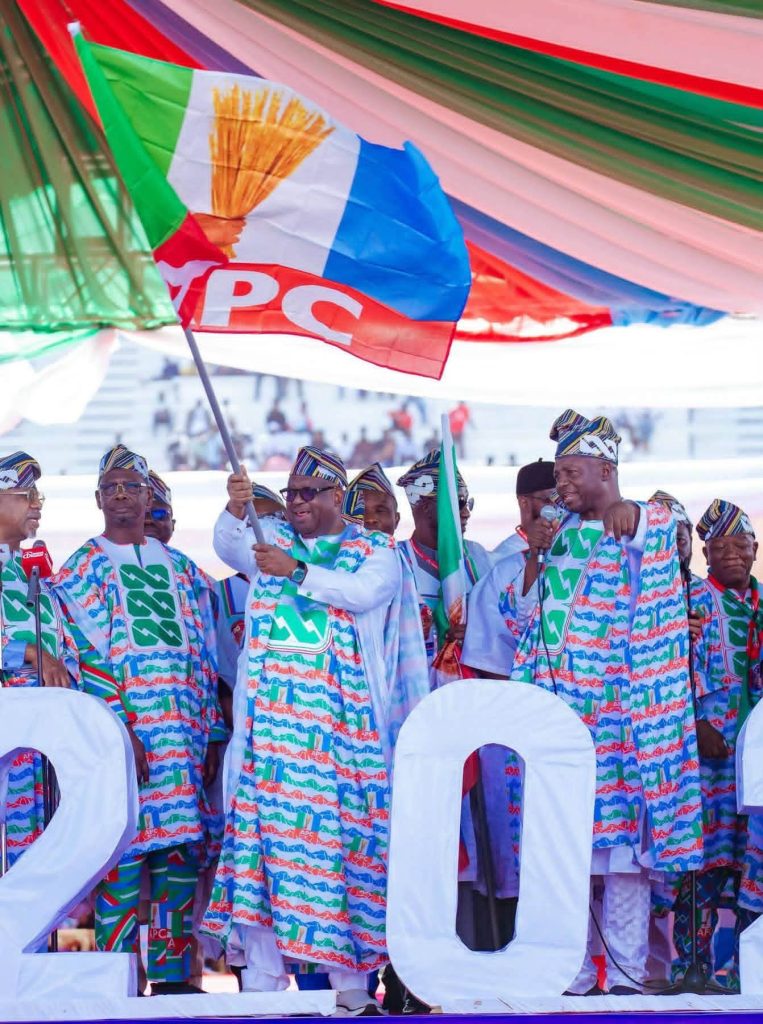
At the Zaria Road Stadium, Jos, where the All Progressives Congress (APC) held its North-Central presidential campaign rally, Tinubu offered assurances that his administration would rebuild communities devastated by violence, facilitate the return of internally displaced persons (IDPs) and strengthen security through the deployment of forest guards and surveillance technology.
The commitments came at a politically significant moment for Plateau, following Governor Caleb Mutfwang’s defection from the Peoples Democratic Party (PDP) to the APC in January 2026 and his subsequent declaration of support for Tinubu’s re-election in 2027.
Mutfwang’s public declaration that Plateau had chosen Tinubu, promising unprecedented votes for the President, has reinforced the ruling party’s growing political influence in the state. However, beyond the electoral calculations, the emerging relationship between the state and the Federal Government now carries expectations that extend to security, reconstruction and economic recovery.
For a state that has endured years of communal violence, displacement and destruction of livelihoods, the most important measure of this political realignment will be its ability to deliver lasting peace.
Security promises and the question of implementation
Tinubu’s announcement that 1,000 forest guards were undergoing training was one of the major security commitments at the rally.
He also disclosed that surveillance cameras had been procured to strengthen early detection and warning systems, while assuring residents that his administration was reinforcing security deployment, coordination and rapid response.
The announcements, however, are not entirely new.
During his April 2, 2026 visit to Jos, following the March 29 attack on Angwan Rukuba in Jos North Local Government Area, the President had promised to deploy an artificial intelligence-enabled network of more than 5,000 digital cameras across Plateau State to assist security agencies in identifying and tracking perpetrators.
He had also directed the relevant security authorities to investigate the killings and promised that the incident would not be repeated.
The November announcement that the cameras had been procured suggests movement towards fulfilling that commitment. However, the critical questions now concern the number acquired, installation timetable, operational coverage and when residents will begin to experience the benefits of the technology.
The same expectation applies to the forest guards.
Their recruitment and training represent an important component of community-based security, particularly in rural settlements and vulnerable areas where conventional security deployments may not always provide sufficient protection.
But training alone cannot guarantee security. Their eventual deployment, operational capacity, intelligence coordination and relationship with existing security agencies will determine how effective the initiative becomes.
For Plateau residents, the real test will be whether farmers can return to their farms, rural communities can sleep without fear of attacks and families can rebuild their lives without the constant threat of displacement.
The humanitarian challenge behind the political promises
Perhaps the most consequential part of Tinubu’s address was his assurance that displaced residents would return to their ancestral homes.
“I assure those displaced that we will rebuild your communities. We will rebuild your communities, and we will bring you back to your community,” he said.
The promise speaks directly to one of the most difficult consequences of Plateau’s insecurity: the prolonged displacement of residents whose homes, farms and livelihoods have been destroyed.
A United Nations High Commissioner for Refugees (UNHCR) displacement snapshot published on August 1, 2026, put the number of internally displaced persons in Plateau State at 45,212.
This figure illustrates the scale of the humanitarian responsibility facing the state and Federal Government.
Returning displaced families will require considerably more than security assurances. Destroyed houses, damaged infrastructure, abandoned farms and disrupted community services must be addressed before resettlement can become sustainable.
This explains the significance of Mutfwang’s appeal for federal assistance through a proposed Marshall Plan for the return of displaced residents.
The governor told the President that his administration would approach the Federal Government with the plan, stressing that substantial intervention would be required to restore affected communities.
The proposal could provide an opportunity for a coordinated reconstruction programme involving the Federal Government, Plateau State Government, traditional institutions and humanitarian organisations.
However, its effectiveness will depend on clearly identified communities, reliable records of displaced households, funding arrangements, reconstruction priorities and security guarantees.
Without these measures, the return of displaced persons could become another temporary exercise rather than a lasting solution.
A political realignment with expectations
Tinubu’s promises must also be understood against the changing political landscape in Plateau State.
Mutfwang’s decision to leave the PDP and join the APC altered the state’s political calculations ahead of the 2027 general elections.
In an interview with Vanguard following his defection, the governor explained that he expected stronger collaboration and support from the Federal Government now that he had joined the ruling party.
He maintained that Plateau had already enjoyed considerable cooperation with the Federal Government but anticipated an improvement in that relationship.
The November rally provided a public demonstration of that alignment.
Mutfwang not only praised Tinubu’s interventions in infrastructure, education and healthcare but also pledged that Plateau would deliver unprecedented votes for the President.
The President, in turn, reaffirmed his commitment to addressing the state’s security and development challenges.
This creates an important political expectation. With the governor now operating within the same political party as the President, residents will reasonably expect stronger coordination between both levels of government in addressing challenges that require federal intervention.
The relationship also presents an opportunity for the APC to demonstrate that political cooperation can produce measurable improvements in the lives of citizens.
For Tinubu, fulfilling the promises could strengthen his political standing in Plateau and the wider North-Central region ahead of 2027. For Mutfwang, demonstrating that his decision to align with the ruling party has translated into tangible benefits could become an important part of his political argument to the electorate.
Nevertheless, the success of the relationship should not be judged solely by the number of political endorsements secured but by the improvements residents experience.
Beyond security: The economic dimension
Tinubu’s address also contained an economic commitment that could have long-term implications for Plateau State.
He promised to work with Mutfwang to transform the state’s airport into a cargo airport, explaining that the facility would enable agricultural produce, particularly vegetables and potatoes, to be transported directly to international markets.
The proposal is significant because agriculture remains an important part of Plateau’s economy, and insecurity has disrupted farming activities and access to markets in several communities.
A functional cargo airport could improve the movement of agricultural produce, reduce logistical constraints and create opportunities for farmers, exporters and other businesses.
However, achieving this objective would require substantial investment in airport infrastructure, cargo handling facilities, cold-chain storage, transportation networks and export logistics.
It also reinforces the connection between security and economic development. Farmers cannot fully benefit from improved market access if they remain unable to cultivate their land or transport their produce safely.
The President’s commitments therefore present an opportunity to address Plateau’s challenges through an integrated approach that connects security, humanitarian recovery and economic development.
The real test begins after the rally
Beyond the political excitement surrounding the President’s visit, Plateau now faces the challenge of translating these assurances into measurable outcomes.
The training of forest guards must lead to effective deployment. The procurement of surveillance cameras must result in functional security infrastructure. The proposed Marshall Plan must move beyond consultations to actual reconstruction, while the promise of a cargo airport must be supported by clear implementation plans.
Equally important is the need for sustained cooperation among political leaders, traditional rulers, security agencies and communities affected by violence.
Tinubu’s appeal for peaceful coexistence was a recognition that lasting peace cannot be achieved through security operations alone. Dialogue, justice, accountability and mutual trust must also form part of the process.
For the people of Plateau, the ultimate value of the November 14 rally will not be determined by the political declarations made from the podium or the promises exchanged between leaders.
It will be determined by whether displaced families return to their ancestral homes, whether communities previously threatened by violence regain confidence, whether farmers resume productive activities and whether the state begins to enjoy the peace and prosperity its people have long desired.
With the 2027 elections approaching, Tinubu and Mutfwang have publicly demonstrated their political partnership. The greater challenge before them is to ensure that the partnership delivers results that Plateau residents can see, experience and ultimately judge at the ballot box.