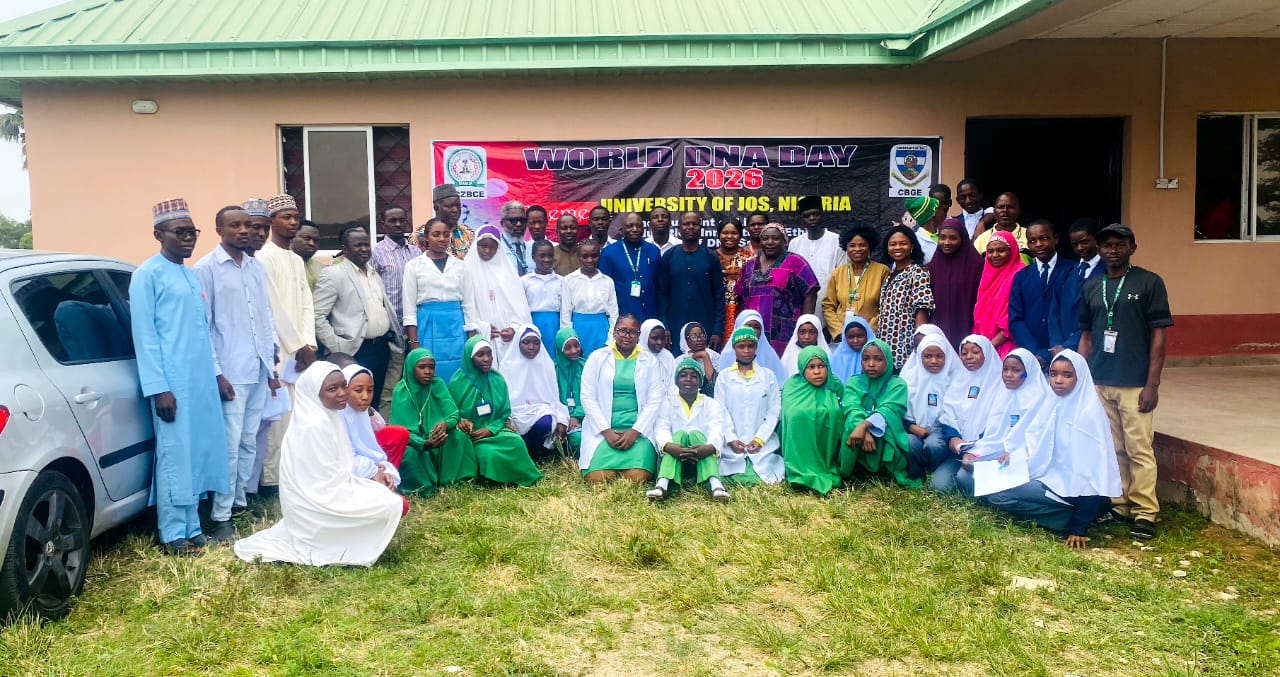


As advances in genetic science continue to reshape medicine, agriculture, and forensic investigations, experts have warned that ethical safeguards must keep pace with innovation.
This formed the focus of discussions at the 2026 World DNA Day event hosted by the Centre for Biotechnology and Genetic Engineering at the University of Jos, where scientists, academics, and students gathered to explore the expanding frontiers of DNA research.
Speaking at the event, Dr Richard Kutshik described DNA as the foundation of life, noting that breakthroughs since the Human Genome Project have transformed the field from simple observation to precise manipulation.
“DNA is no longer seen as static. It is now readable and, to some extent, programmable,” he said, pointing to gene-editing tools such as CRISPR that allow scientists to alter genetic material with increasing accuracy.
According to him, these advancements are already finding practical application across sectors. In medicine, genetic research is improving the diagnosis and treatment of inherited diseases, while in agriculture it is contributing to higher crop yields and resilience. DNA analysis has also become a critical tool in forensic investigations.
Despite these gains, speakers at the event stressed that the growing power of genetic technologies raises complex ethical questions.
Director of the Centre, Ishaya Longdet, said the theme of this year’s celebration underscores the need to balance scientific progress with responsibility. He emphasised that public understanding of DNA science is essential, particularly as it increasingly influences decisions around healthcare, family planning, and personal data.
Representing the Vice-Chancellor, Joshua Chollom echoed similar concerns, warning that the ability to manipulate genetic material brings risks related to privacy, inequality, and potential misuse.
“The power to manipulate genetic material raises important moral questions around privacy, equity, and potential misuse,” he said, calling for strong ethical standards and accountability in scientific research.
The event also placed strong emphasis on youth engagement. Students from eight secondary schools across Jos participated in interactive sessions, posing questions on gene editing, access to biotechnology, and basic genetic concepts.
For many of them, the discussions opened up new perspectives. Nathaniel Andrew, a student of GSS Hwolshe, said the sessions deepened his understanding of the ethical implications of DNA technologies, including access to treatment and ownership of genetic data.
He called for stronger regulatory frameworks and closer collaboration between scientists and schools to ensure that awareness of emerging technologies begins early.
Observed globally, World DNA Day commemorates two major milestones in science—the discovery of the DNA double helix structure in 1953 and the completion of the Human Genome Project in 2003.