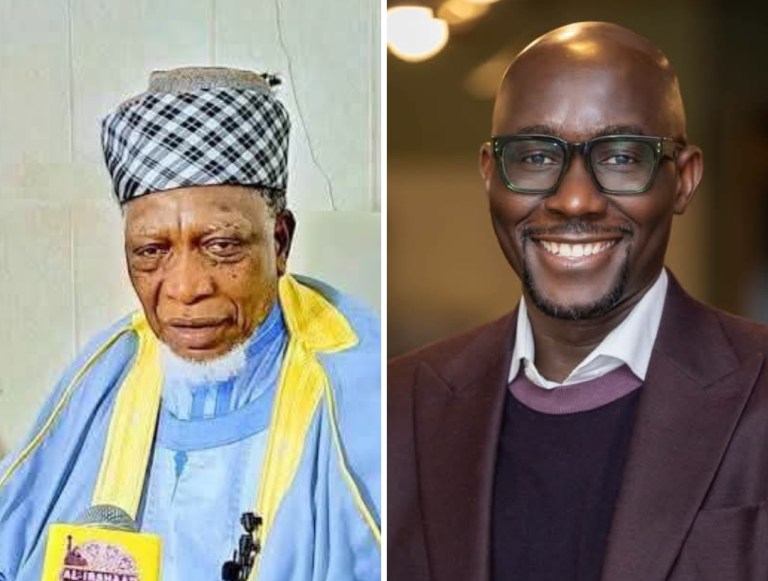
A Plateau State-based public policy commentator, Dr Barth Shepkong, has warned against the use of religious numerical strength to determine political entitlement in Nigeria, saying such an approach could deepen divisions and undermine national cohesion ahead of the 2027 general elections.
Shepkong, in a statement titled, “Sheikh Yahaya Jingir and the Dangerous Politics of Religious Majoritarianism,” was reacting to remarks attributed to Islamic cleric Sheikh Yahaya Jingir concerning the Muslim-Muslim presidential ticket and the role of religious identity in Nigerian politics.
He expressed concern over reports that Jingir defended the Muslim-Muslim ticket, referred to the numerical strength of Muslims in relation to electoral support, used the term “infidels” in referring to opponents and suggested that Nigerians uncomfortable with such political arrangements should leave the country.
Shepkong said his objection was not to Jingir’s right to hold or express political opinions, stressing that every Nigerian has the constitutional right to participate in political debate.
Rather, he said, his concern was the possibility of religious influence being used to encourage citizens to view elections primarily through the prism of religious identity.
According to him, political competition should be centred on governance, competence and the issues affecting citizens rather than a contest between religious groups.
“Elections are designed to determine who governs, not which religion prevails,” Shepkong said, citing insecurity, poverty, unemployment, corruption, infrastructure and the cost of living as issues that should shape electoral choices.
He added: “A Muslim-majority vote does not make Nigeria a Muslim state. A Christian-majority vote would not make Nigeria a Christian state. Nigeria belongs equally to all Nigerians.”
Shepkong said support for a Muslim-Muslim ticket could legitimately be debated within Nigeria’s democratic space, but argued that such political choices should not be presented as evidence of religious superiority or entitlement.
He warned that when electoral competition becomes framed as a struggle for religious dominance, political opponents could increasingly be viewed as enemies because of their faith.
The public policy commentator said religious leaders, given their influence over large sections of the population, had a particular responsibility to promote peaceful coexistence, moderation and mutual respect.
He cited Plateau State as an example of why identity-based political rhetoric should be treated with caution, noting that communities in the state had experienced the consequences of ethnic and religious tensions over the years.
“As a son of Plateau State, I write from a place shaped by both the promise of diversity and the pain of division,” he said.
Shepkong maintained that Nigerians across religious lines were confronted by similar socioeconomic challenges, including insecurity, inflation, unemployment and limited economic opportunities.
He therefore called for greater emphasis on equal citizenship, accountable governance and the protection of the rights and dignity of Nigerians irrespective of their religious affiliation.
He also stressed that his criticism was not directed at Islam or Muslims, saying he would oppose similar attempts by any religious group to promote political entitlement, exclusion or superiority.
“What Nigeria needs is a renewed commitment to equal citizenship. What Plateau State needs is greater interfaith trust. What our future demands is leadership that builds bridges rather than boundaries,” he said.
Shepkong urged Jingir and other influential religious leaders to use their platforms to promote messages that strengthen peaceful coexistence and democratic values as the country moves towards the 2027 elections.