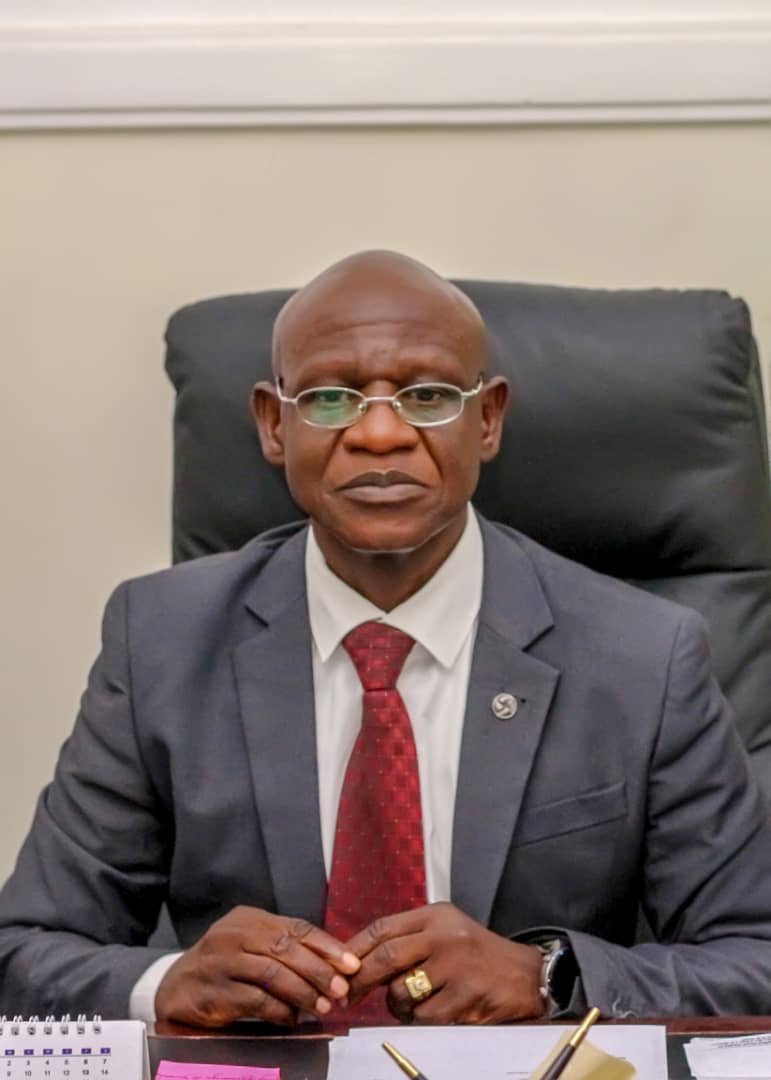

Following his re-election at the 73rd General Church Council of the Evangelical Church Winning All (ECWA), Rev. Dr. Ayuba Asheshe has opened up on the challenges of leading one of Nigeria’s largest church denominations, insecurity in Plateau and across the country, pastors’ welfare, morality, politics, and his agenda for a second term in office.
In this exclusive interview, the ECWA General Secretary speaks candidly on efforts to strengthen unity within the church, plans for salary centralisation for pastors, and why he believes insecurity has overwhelmed the country.
Below are excerpts:
Congratulations on your re-election as ECWA General Secretary. In your view, what prompted this second mandate?
Thank you so much for your congratulatory message. I’m grateful. What prompted it, I think I may not fully know because it is the electorate that decided, but I remain very grateful for the kind of confidence they have shown in me. I’m so happy and remain grateful to the entire leadership of our districts.
Being in a position of authority is not easy, especially in a religious organisation where there are different interests and groups. What were your major challenges during your first three years as General Secretary of ECWA?
The challenges have been enormous. Many of them were learning opportunities and gave me the chance to see ECWA at a deeper and wider level. It has been quite challenging, tasking and energy-sapping, but to God be the glory, it has been good.
Can you mention one or two particularly difficult issues and explain how you handled them?
One of the things I tried to do as the chief administrator of ECWA is to mend relationships where relationships were strained. I trusted God to help me understand the mindset of leaders and ask probing questions: What brought about the sourness in the relationship? Who is to blame? How can it be remedied?
My principle was to remain open to everybody. I never said these are my favourites and these are not. We are dealing with pastors, local overseers, district church councils, heads of departments, theological institutions, hospitals, business arms and many others. So for me, my office was open to everyone.
How would you describe your relationship with the ECWA President and other leaders under your administration?
One thing that has given us an edge is the cordial relationship we have maintained in the past three years. In the ECWA Executive, the two principal actors are the President and the General Secretary. If the two are in good relationship, it naturally affects the rest of the Executive and the church positively.
We recognised that and decided to work amicably together. Every Wednesday, Executive members met to pray together for 30 minutes, rotating between offices. Workers watched this unity among us, and to God be the glory, it gave us an edge.
You have just been re-elected and will spend another three years in office. What is your agenda for this second tenure?
What I intend to accomplish in the next three years is genuine relationship among pastors because that is foundational. You are first called as a pastor; every other office is secondary.
As chief administrator, I have never allowed my position to make me forget that I am a pastor. Every pastor I see is my colleague. I do not wait for pastors to greet me first because spiritually we are on the same level.
I also want the least worker — cleaners, office attendants and security personnel — to feel free to associate with me because they are labourers in the vineyard of the Lord.
Talking about pastors’ welfare, are you satisfied with the welfare of pastors in ECWA?
There are many things we need to consider. There are pastors in urban areas and pastors in rural areas, yet when we were in seminary there were no “urban” or “rural” pastors.
The challenge is that two people may graduate together, but one is posted to a rural area where salary itself is a challenge, while another serves in an urban church where gifts may be ten times the official salary. Is that fair?
That was why the late Trustee, Moses Dembo, passionately advocated for some level of equality so pastors serving in rural areas would not suffer because of location.
Glory be to God, at the last General Church Council meeting, this issue was substantially addressed because we are beginning a test-run of salary centralisation.
A rural church may not generate up to ₦50,000 monthly while the pastor’s salary may be ₦150,000. Wealthier churches will contribute more, and the excess will support pastors in financially weak rural churches.
Some people doubt whether the policy will truly be implemented. What assurance can you give?
Any resolution taken at ECWA Headquarters is not something to joke with. We agreed there would first be a test run involving selected districts across trustee zones before gradual expansion.
We do not want to rush into full implementation without proper assessment. By the grace of God, it will become a reality.
What is your assessment of President Bola Ahmed Tinubu’s administration and that of Governor Caleb Mutfwang?
First, let me make it clear that I am not a politician. I am a pastor, and an umpire must not be seen as partial.
President Tinubu came into office at a time Nigeria was already facing political, economic, social and religious crises. What I can say is that he is doing his best to make his government inclusive. People many never expected to see in government are part of his administration, and that is a plus.
As for Governor Caleb Mutfwang, we all know whether things are working or not. The important question is what all Plateau people — pastors, imams and business people — can do to make Plateau work. The governor is trying his best.
Recently, there was controversy over comments made concerning indigeneship in Plateau State. What is your view?
Every state in Nigeria has indigenes. Why should Plateau be treated differently? If you are Nigerian and do not know your roots, that is a problem.
I was born and raised in Kaduna State, but that does not make me forget where I come from.
Tin mining brought many people to Plateau from different places, but simply because someone came for business does not mean that place automatically becomes their ancestral origin.
How has insecurity affected ECWA as a denomination?
We have issued many press statements on this issue. Many people have been killed, kidnapped and communities destroyed.
Recently, a pastor in Bokkos lost his wife, children and entire household in one attack. Whole communities have been wiped out.
Insecurity affects everybody. It prevents people from going to work, church or mosque. We see attackers moving in large numbers on motorcycles despite checkpoints everywhere, yet after attacks, we rarely hear of arrests or justice.
Honestly, I do not think we are on top of the situation. It appears the situation is on top of us.
Are you satisfied with the involvement of Christians in politics and governance?
There has long been a wrong notion among Christians that politics is dirty. Agreed, politics may be dirty, but if clean people refuse to enter it, dirty people will dominate it and make dirty laws which even clean people will be forced to obey.
Christians should participate. My advice is this: remember first that you are a child of God and secondly that you represent all people, not just Christians.
Why do you think morality was higher in the 1970s and 1980s despite fewer churches compared to today?
The Bible already warned us about this in 1 Timothy and 2 Timothy — that in the last days people would be full of religion but empty spiritually.
In the 1970s and 1980s, morality was indeed higher. People knew right from wrong. Today, moral decadence is everywhere — in homes, churches, mosques, schools and businesses.
Many people have theological knowledge but zero spirituality. Churches are full, yet lives are not changing.
Sometimes religious gatherings have become social centres where people simply listen to polished English and philosophy, laugh and go home unchanged.
Finally, what is your message to government, the church and ECWA members?
To my fellow pastors, teach the solid and undiluted Word of God.
To politicians, represent the people well because it was not only Christians or Muslims who voted for you.
To our pastors serving in difficult places, you are our foot soldiers. We see your sacrifices and diligence.
To ECWA members, you are our pride. Your support continues to sustain evangelism within and outside Nigeria.
And to the members of the General Church Council and all delegates, I remain grateful for the confidence you placed in me during the 73rd General Church Council. May the Lord continue to help all of us to promote ECWA in our various capacities.