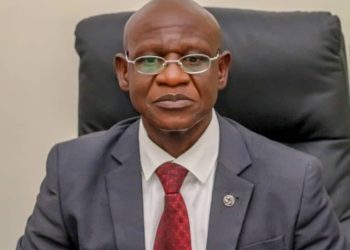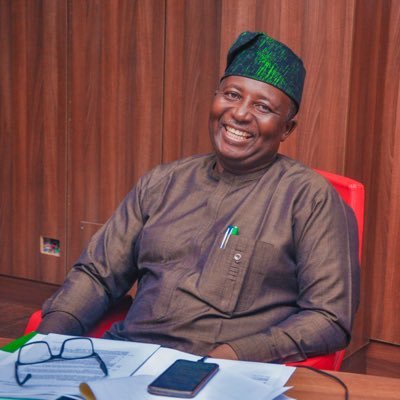

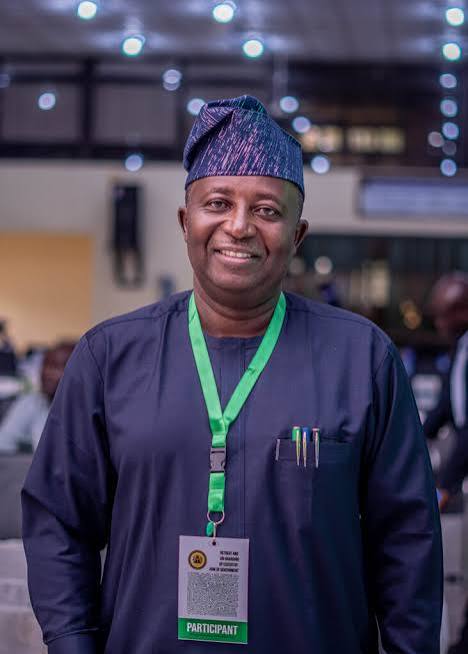
Secretary to the Government of Plateau State, Arc. Samuel Nanchang Jatau, speaks with journalists on Governor Caleb Mutfwang’s three years in office, the state’s financial realities, security challenges, agricultural transformation agenda, tourism revival, pension payments, youth employment and plans to attract investment. Excerpts:
The Office of the Secretary to the Government is often described as the engine room of government. Why is that?
Jatau: I don’t know whether I would personally describe it as the engine room, but perhaps people use that description because the office coordinates virtually everything that happens in government.
Government is made up of many parts, just like the different components of a vehicle. The Office of the Secretary to the Government serves as a meeting point for government ministries, departments and agencies, civil society organisations, development partners and members of the public.
It is where government policies are coordinated, ideas are harmonised and programmes are monitored. People come here every day with different concerns. Even someone walking on the street can walk in with a complaint, and you have to listen. So perhaps that is why people call it the engine room of government.
How challenging have the last three years been?
Jatau: They have been extremely challenging, particularly because of limited resources.
When this administration came into office, Plateau State was in a difficult situation. There was a backlog of about five months of unpaid salaries, and the civil service was demoralised. Government had to obtain a facility of about ₦15 billion to clear those salary arrears and restore confidence in the system.
Today, people see revenue figures and assume government has abundant resources, but that is not the reality. What matters is the purchasing power of that revenue.
For instance, if about ₦12 billion comes into the state in a month, over ₦6 billion immediately goes to salaries and related obligations. The judiciary and legislature must also receive their statutory allocations.
By the time those obligations are met, more than ₦8 billion is already committed. Then you have security emergencies, health emergencies such as cholera outbreaks and other unforeseen expenditures. What remains for development is very limited.
At the same time, there is significant infrastructure decay across the state. Roads, schools, healthcare facilities and other public infrastructure require substantial investment. The reality is that inflation and the declining value of the naira have reduced what government can achieve with available resources.
Despite these challenges, what achievements would you point to?
Jatau: I believe the people themselves can see the achievements.
Road construction is ongoing across the state. We recently inspected projects in Shendam, Japal, Jebbu-Bassa-Mangu, Fobur-Angware and other locations. Work is progressing steadily.
Another achievement is the relative peace and stability we enjoy. Businesses continue to operate. Nightlife remains active in Jos. The workforce is stable and labour relations have improved.
Our tertiary institutions have also recorded significant progress. Plateau State University has expanded its academic programmes, and enrolment has increased. Students are now coming from different parts of Nigeria to study there.
At Plateau State Polytechnic, enrolment has risen dramatically from about 3,000 students when we came into office to nearly 16,000 today.
Government recently released ₦600 million for the fencing of Plateau State University, while efforts are ongoing to strengthen academic programmes, including the Faculty of Pharmaceutical Sciences and the Faculty of Medicine.
The Metro Bus initiative is another important intervention. It is helping workers and residents reduce transportation costs during a very difficult economic period.
Which sectors are receiving the greatest attention from government?
Jatau: We are pursuing reforms across several sectors, but agriculture and food security remain major priorities.
Plateau State is an agrarian state. More than 70 per cent of our people depend on agriculture. At a time when unemployment and poverty are major concerns, agriculture offers one of the fastest pathways to economic empowerment.
That is why we launched initiatives such as the procurement of more than 200 hand tillers to improve mechanisation and expand cultivation.
We are also implementing the Plateau potato initiative, which involves introducing improved hybrid seedlings capable of significantly increasing productivity and farmers’ incomes.
Government recently flagged off an ultra-modern abattoir. What is the broader vision behind the project?
Jatau: The project goes beyond meat processing.
The abattoir will have the capacity to process 500 cattle daily. We are looking beyond local consumption to opportunities within the global meat market.
Nigeria has a large domestic market, but there are also opportunities to earn foreign exchange through livestock and meat exports.
The project is expected to create opportunities throughout the value chain, including cattle production, feedlots, transportation, processing and marketing.
What role does the Special Agro-Industrial Processing Zone (SAPZ) play in this vision?
Jatau: The SAPZ is one of the most strategic projects currently being implemented.
Without industrialisation, sustainable economic growth is difficult. Through the SAPZ, we are promoting agro-industrial development that will create jobs, attract investors and add value to agricultural products.
Construction has already commenced, and we believe the project will significantly transform the state’s economy.
Are investors showing interest in Plateau State?
Jatau: Yes, very much.
There is increasing interest from both local and international investors.
Recently, investors from the United Kingdom met with Governor Caleb Mutfwang and discussed a proposed investment exceeding $400 million in the livestock sector, particularly dairy production.
The discussions are still at an early stage, but they demonstrate growing investor confidence in Plateau State.
How can ordinary citizens benefit from these initiatives?
Jatau: There are opportunities everywhere within the agricultural value chain.
We are encouraging people to explore livestock production, poultry, piggery and pasture cultivation.
Many people do not realise the economic potential of improved cattle breeds. Some imported breeds can produce up to 20 or 25 litres of milk daily.
We also have over 100,000 hectares suitable for pasture development. Even the cultivation of quality livestock feed can become a profitable business.
Government’s responsibility is to create an enabling environment, but citizens must also position themselves to take advantage of these opportunities.
Apart from agriculture, what other sectors are priorities?
Jatau: Mining and tourism.
Mining is under federal jurisdiction, but we are working to ensure host communities derive greater benefits from mining activities taking place within Plateau State.
In tourism, we are working with the United Nations Development Programme on a tourism master plan.
Hill Station Hotel is nearing completion. Plateau Hotel is progressing. The Wildlife Park is also being revitalised through partnerships with international experts and investors.
We believe tourism can become a major economic driver for Plateau State.
There are concerns that Executive Order 003 has not been fully implemented, particularly regarding roaming cattle. What is government’s position?
Jatau: Government remains committed to implementing the Executive Order.
We recognise concerns about roaming cattle, and preparations are underway to strengthen enforcement.
However, we must proceed carefully because Plateau State also faces security challenges. We have to ensure that implementation promotes peace and stability.
The long-term solution remains ranching and designated livestock areas where animals can be properly managed.
Why was Tati Hotel converted into office accommodation rather than maintained as a commercial hotel?
Jatau: Government acquired the property in the public interest.
The idea of converting it into office accommodation predates this administration. Previous administrations also considered the option.
One of the challenges we face is inadequate office accommodation. Several agencies, including revenue-generating institutions, now operate from the facility.
By providing them with functional workspaces, government improves service delivery and strengthens revenue generation.
What is the status of the Federal Government’s promised security surveillance project for Plateau State?
Jatau: The process is ongoing.
Officials from Plateau State participated in engagements with the Federal Government and visited China to inspect facilities connected to the project.
As announced, the intervention includes approximately 5,000 surveillance cameras and related security infrastructure.
These processes take time because procurement procedures must be followed, equipment must be manufactured and installations must be completed.
While awaiting that intervention, Plateau State has continued to strengthen its own security architecture through drones, surveillance systems and a command-and-control centre.
There are concerns about pension arrears. What progress has been made?
Jatau: Government has made significant progress.
The Governor recently disclosed that over ₦16 billion has been spent on pensions and gratuities.
That does not mean all pension liabilities have been cleared. The total liability remains substantial, estimated at about ₦60 billion.
However, payments are being made systematically according to established timelines and retirement years. Progress is being recorded, and government remains committed to addressing the backlog.
What is government doing to address youth unemployment and rural-urban migration?
Jatau: Agriculture is a major part of the solution, but it is not the only one.
We are promoting rural access roads through programmes such as RAMP, improving connectivity and exploring innovation hubs and business support centres.
We are also looking at business process outsourcing opportunities. The MTN facility around the Air Force area is expected to create opportunities for young people to work remotely for companies across the world and earn foreign exchange.
Our objective is to make rural communities more attractive and economically viable.
What message would you like to leave with Plateau people?
Jatau: Plateau people are hardworking, hospitable and peaceful people.
We recognise the challenges confronting our state and our country, but we are making steady progress.
Government is investing in agriculture, education, infrastructure, tourism, mining and security. Investors are showing renewed interest in Plateau State.
What we need now is patience, understanding and collective support.
I firmly believe Plateau has a bright future. We have the resources, the people and the opportunities. If we continue working together, the state will achieve even greater progress in the years ahead.