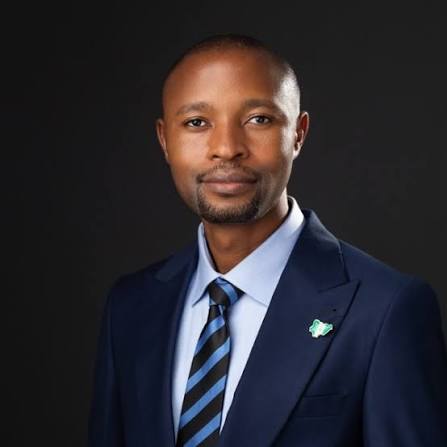
A former Plateau State governorship aspirant and chieftain of the Peoples Democratic Party (PDP), Alex Ladan, has expressed concern over what he described as Nigeria’s gradual drift towards a one-party state, warning that the shrinking space for opposition politics poses a threat to the country’s democratic development.
Ladan, who spoke in an interview ahead of Nigeria’s 27th Democracy Day celebration, said the opposition was increasingly being weakened, while key democratic principles such as freedom of expression, accountability and the rule of law remained under strain.
According to him, although Nigeria has sustained uninterrupted democratic rule since 1999, the country’s democratic journey cannot be assessed solely on the basis of electoral continuity.
He argued that democracy must be measured by the extent to which citizens enjoy freedom of expression, leaders remain accountable to the people, and institutions are allowed to function independently.
“The concept of democracy is supposed to be hinged on freedom of expression, rule of law and accountability. These are the three critical tenets of democratic government. If you appraise the Nigerian situation, you would find that we are struggling in these three critical areas,” he said.
Ladan noted that accountability remains one of the weakest links in Nigeria’s democratic practice, insisting that public office holders must not only account for resources entrusted to them but also for promises made to citizens.
He said commitments made during election campaigns constitute a social contract between leaders and the people and should be subject to public scrutiny.
On freedom of expression, the PDP chieftain lamented that criticism of government is increasingly being viewed as hostility, a situation he said discourages citizens from speaking openly on issues of public concern.
According to him, constructive criticism should be welcomed in any democratic society because it helps leaders improve governance and remain responsive to the needs of the people.
“If you truly want to make progress as a leader, you must be open to constructive criticism. The moment people do not have the freedom to express themselves, they are forced to remain silent even when they should speak,” he stated.
Ladan also raised concerns about the state of the judiciary, describing adherence to the rule of law as the major distinction between advanced societies and those struggling with development.
He argued that the judiciary must be allowed to function independently without undue influence from the executive arm of government.
“The judiciary is supposed to be the last hope of the common man. Anyone who feels disadvantaged in society should, at the very least, have access to justice. Unfortunately, we still have a long way to go in terms of the rule of law,” he said.
The former governorship aspirant further warned that weaknesses within democratic institutions were contributing to broader governance challenges, including insecurity and declining public trust in government.
While acknowledging that Nigeria has made progress by sustaining democratic rule for nearly three decades, he maintained that recent political developments have raised concerns about the future of plural democracy in the country.
“Here we are in 2026 having a near one-party system. Opposition seems to have lost its voice,” he said.
Ladan alleged that many opposition figures were either facing legal challenges or had become politically subdued, a development he said does not bode well for democratic competition and accountability.
He stressed that opposition parties play a critical role in strengthening democracy by providing alternatives and holding governments accountable.
According to him, any democratic system that weakens opposition voices risks undermining its own credibility and long-term stability.
“The opposition is a critical part of democracy, and the current government, particularly at the federal level, has not provided the platform for the opposition to thrive,” he stated.
Despite his concerns, Ladan said Nigeria’s democratic experience should still be celebrated, noting that uninterrupted civilian rule remains an achievement worth preserving.
However, he urged political leaders, institutions and citizens to remain committed to strengthening democratic values and addressing the challenges confronting the country’s political system.
“As we celebrate democracy, we must continue to point out the things that are wrong so that we can find ways of addressing them and strengthening our democratic institutions,” he said.